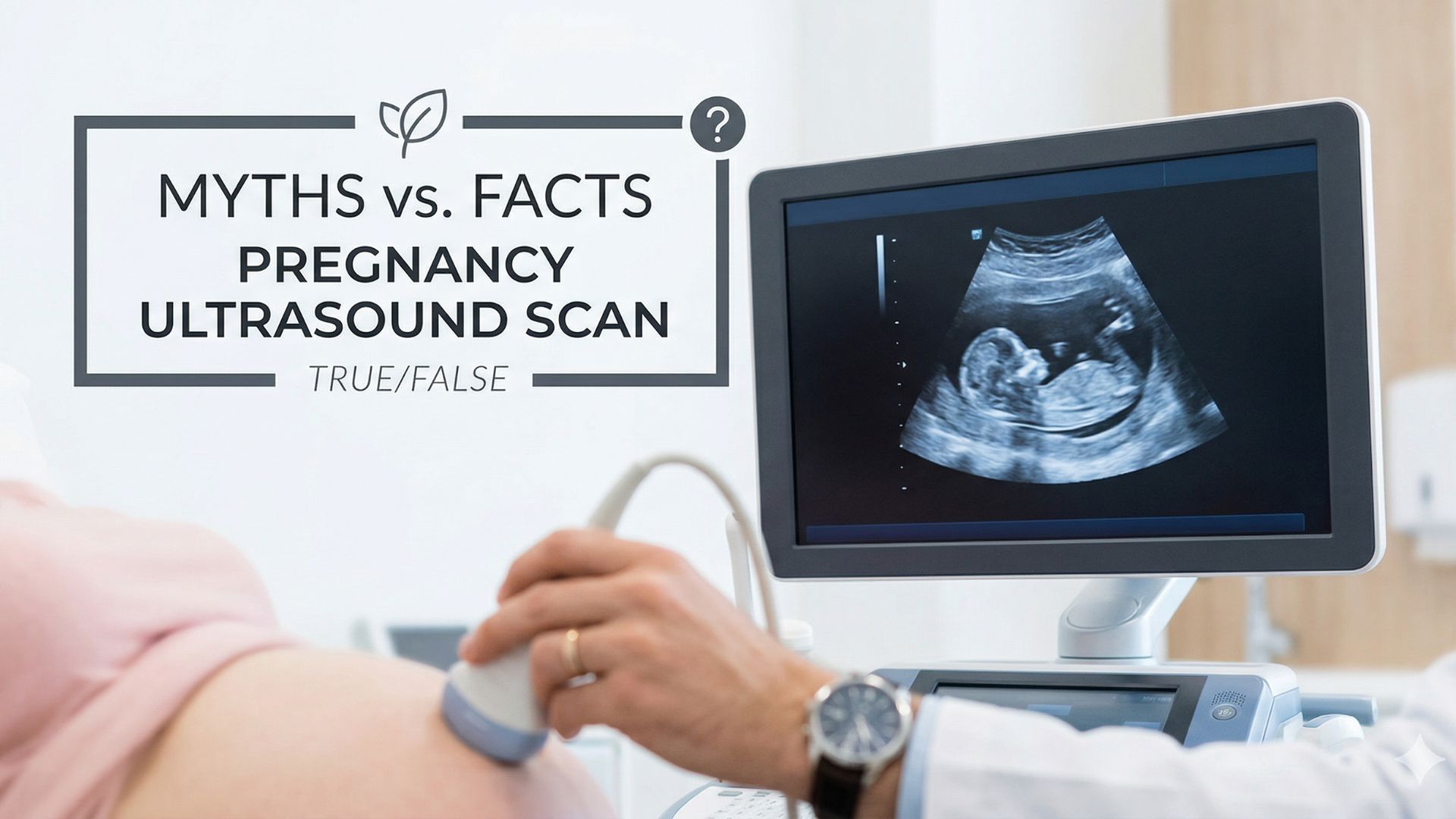
Myths and Facts About Pregnancy Ultrasound Scan
For many expecting mothers, the first trimester scan is a milestone moment — the first opportunity to see their new addition. Yet alongside this excitement, myths and misconceptions about pregnancy ultrasounds are surprisingly common. In this article, we address some of the most frequent ones and separate fact from fiction.
Myth 1: Ultrasound Scan Radiations Are Harmful to the Baby
Fact: Ultrasound scans do not use radiation at all. They work by emitting high-frequency sound waves that bounce off fetal tissue to produce a sonogram image. There is no ionising radiation involved, and decades of clinical use and research support their safety for both mother and baby.
Myth 2: Too Many Scans Can Affect the Baby
Fact: Routine scans are clinically recommended because they help monitor the baby's development and detect potential concerns early. When additional scans are advised — for fetal growth, amniotic fluid assessment, or a specific clinical condition — they are prescribed because the benefit of close monitoring outweighs any theoretical concern. Ultrasound has a strong safety record across routine and intensive monitoring scenarios.
Myth 3: 3D/4D Scans Are Safer or Better Than 2D Scans
Fact: 3D and 4D ultrasounds use the same sound wave frequency as standard 2D scans — the difference is only in how the data is processed and displayed. For diagnostic imaging purposes, 2D ultrasound remains the clinical standard and provides the clearest information for assessing fetal anatomy and wellbeing. 3D/4D imaging has specific uses but is not inherently "better" or "safer" than 2D.
Myth 4: If You Feel Fine, You Don't Need Scans
Fact: Even when a pregnancy feels entirely normal, ultrasound scans remain essential. Many fetal conditions — including structural concerns, placental issues, and chromosomal abnormalities — do not produce symptoms the mother can feel. Regular scans allow these to be detected and addressed at a stage when intervention is most effective.
Myth 5: Scans Are Only Needed in High-Risk Pregnancies
Fact: Ultrasound scans are an important part of antenatal care for all pregnancies — not only those considered high-risk. They confirm fetal growth and positioning, check for developmental concerns, and provide reassurance throughout pregnancy. Routine scanning schedules exist precisely because early detection benefits every pregnancy.
Why Pregnancy Ultrasounds Are Important
- Monitor the baby's growth and development at every trimester
- Detect congenital abnormalities early, when management options are broadest
- Assess the health and position of the placenta
- Track amniotic fluid levels throughout pregnancy
- Guide doctors in managing high-risk pregnancies with greater precision
Beyond their clinical value, scans also offer reassurance — and, where concerns are identified, prompt timely action.
Final Thoughts
Pregnancy scans are an essential part of good prenatal care. The myths that surround them can create unnecessary fear and, in some cases, lead to avoidable delays in seeking care. The truth is simple: ultrasound scans are safe, informative, and clinically crucial. At Fetocare Diagnostics, we offer advanced fetal medicine services and high-quality ultrasound scans with a commitment to accuracy, safety, and compassionate care at every step of your pregnancy journey.